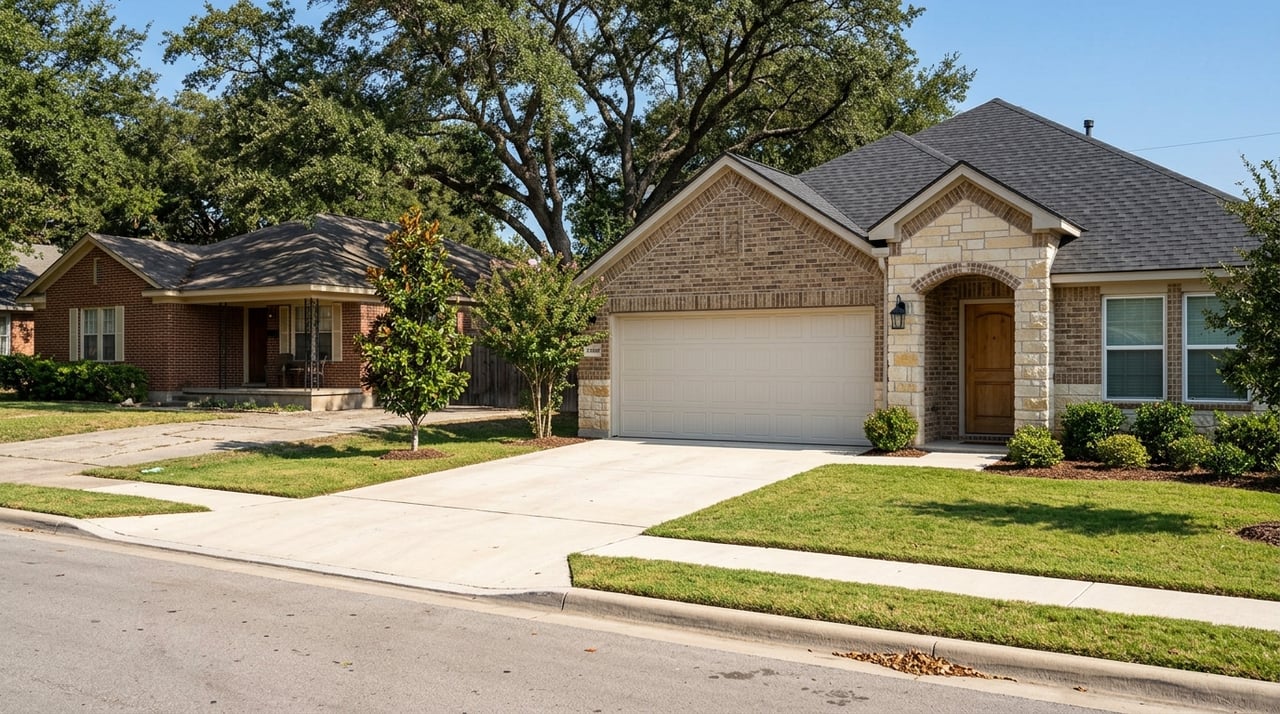
Trying to choose between a newer master-planned neighborhood and an established area in League City? You are not alone. This is one of the biggest decisions buyers face here because League City offers both newer amenity-rich communities and older sections with mature trees, character, and a more settled feel. If you are weighing your options, this guide will help you compare the tradeoffs that matter most so you can narrow your search with confidence. Let’s dive in.
Why this comparison matters in League City
League City is a great place to have this debate because it is both established and still growing. The city estimated a population of 118,456 in July 2024, with a 74.7% owner-occupied rate and a median owner-occupied home value of $360,000. City planning documents also note that 54% of homes were built since 2000.
That split shows up clearly on the map. League City’s parks and open-space planning identifies older established neighborhoods north of League City Parkway, while much of the area south of the Parkway has developed since 2000. In other words, your choice often comes down to whether you want a more mature setting or a more recently built community design.
What newer League City neighborhoods offer
Newer neighborhoods in League City often appeal to buyers who want planned amenities, newer construction, and a more uniform look from street to street. These communities are usually designed around recreation, standard lot programs, and organized common-area maintenance.
In practical terms, newer neighborhoods often deliver more amenity density. That can make daily life feel convenient if you want neighborhood pools, trails, sports spaces, and recreation centers close to home. It can also create a more predictable neighborhood appearance.
Tuscan Lakes at a glance
Tuscan Lakes is a large mixed-use master-planned community on SH 96 near FM 270 and I-45. City planning materials show single-family lot categories in 50-, 55-, 60-, 70-, 75-, and 90-foot product lines. That kind of structure gives buyers a clearer sense of how different sections may feel.
The community is also known for its recreational assets. Johnson Development describes a 27-acre city park with soccer fields, trails, two gymnasiums, and an Olympic-size pool, and the city noted that park requirements were exceeded with 28.7 acres dedicated to the city. Common areas are HOA-maintained, while detention is maintained by Galveston County MUD 36.
Westover Park at a glance
Westover Park is a 500-acre master-planned community with about 1,400 homes. It includes two recreation centers, multiple pools, sports fields, playgrounds, and a tennis complex. It is located about three miles west of I-45 and on the south side of SH 518.
The city’s master plan shows lot products ranging from 52' x 115' to 80' x 130'. That makes Westover Park a good example of how newer League City neighborhoods can offer both more typical suburban lots and larger premium sections within the same community.
Common pros of newer communities
If you are considering a newer neighborhood, these are often the biggest advantages:
- More neighborhood amenities in one place
- Newer home construction and systems
- More standardized streetscapes and curb appeal
- Planned common areas with formal maintenance structures
- Easier comparison between sections because lot programs are clearly defined
Common tradeoffs in newer communities
The benefits usually come with a few tradeoffs. Newer communities in League City often have more formal HOA and MUD structures, which can affect your monthly carrying costs and the level of oversight for exterior changes. Because many are more recent buildouts, they may also have less mature tree cover than older parts of the city.
Another factor is future development. League City says about 40% of the city remains undeveloped, and its Westside Master Plan covers nearly 4,000 acres. That means some newer neighborhoods may still be near active or future construction for a while.
What established League City neighborhoods offer
Established neighborhoods usually appeal to buyers who care most about tree cover, character, location maturity, and a more lived-in feel. In League City, these neighborhoods often offer more variation from one section to the next.
That variety can be a real strength. Instead of a highly standardized master plan, you may find different lot sizes, older landscaping, and a stronger sense that the neighborhood has evolved over time.
South Shore Harbour, Countryside South, and Bay Colony
Several well-known established communities date back to the city’s earlier growth eras. South Shore Harbour was created in 1981 with a municipal utility district and is identified by the city as an undocumented PUD that predates League City’s 1999 zoning adoption. Its community association maintains landscaping, a pool, a park with playground equipment, tennis and basketball courts, and an event pavilion.
Countryside South is older still, established in 1979. It is deed restricted, has a pool clubhouse and tennis court, and requires board approval for exterior home improvements. Bay Colony, created in 1988, is another example of a pre-zoning PUD in League City.
Historic District and close-in areas
League City’s Historic District offers a different kind of established living. The city describes 19th-century homes and buildings, live oaks planted more than 100 years ago, and a walkable cluster of boutiques, gardens, museums, parks, and restaurants. Founder’s Square is within walking distance of League Park, which helps explain why close-in established areas can feel more connected and walkable than many newer subdivisions.
Older League City sections can also be more varied in lot size. Some fall under RSF-7 zoning, which means a 7,000-square-foot minimum lot size. That creates more section-by-section differences than you often see in newer master-planned communities.
Common pros of established neighborhoods
If you are leaning toward an established area, the biggest advantages often include:
- Mature trees and landscaping
- More architectural and lot-size variety
- A stronger sense of neighborhood character
- Potentially more walkable close-in surroundings in select areas
- Less likelihood of nearby large-scale new construction in fully built-out sections
Common tradeoffs in established neighborhoods
Older neighborhoods can also require a closer look at infrastructure and maintenance expectations. League City identifies flooding as a major concern because of its proximity to Galveston Bay, and the city has active drainage and utility projects in older subdivisions such as Countryside, Rustic Oaks, Meadowbend, and Bay Ridge.
That does not mean an older neighborhood is a poor choice. It simply means you should evaluate drainage patterns, infrastructure age, and ongoing city improvement work carefully when comparing homes.
Key decision factors for buyers
The right choice usually depends less on whether a neighborhood is newer or older and more on how well it fits your lifestyle, budget, and long-term goals.
Amenities versus carrying costs
Newer communities often win on pools, trails, recreation centers, and HOA-maintained open space. If those features matter to your day-to-day life, the added structure may feel worthwhile. At the same time, formal HOA and MUD frameworks can mean more oversight and a different cost picture than you may find in some established areas.
Lot size and yard use
If outdoor space matters, pay close attention to the lot itself rather than just the neighborhood name. Newer communities often use standardized lot-width programs, while older sections may be smaller or more irregular. That can affect privacy, outdoor entertaining, and whether adding features later feels realistic.
Mature setting versus future growth
Some buyers love being in a fast-growing area with newer infrastructure and expanding amenities. Others prefer a setting that already feels complete. In League City, this can be an important distinction because so much land remains undeveloped in some growth corridors.
Drainage and infrastructure age
This is one of the most important practical filters in League City. The city notes that flooding is a major concern and that retention ponds and elevation add to per-lot cost. Whether you buy in a newer or established neighborhood, it is smart to evaluate drainage features, nearby ponds or channels, and the age or condition of surrounding infrastructure.
School zoning by address
If school assignment is part of your home search, verify the specific address. Research materials for Tuscan Lakes reference Dickinson ISD or Clear Creek ISD, while Westover Park is in Clear Creek ISD. In League City, district assignment can vary within or across communities, so it is best not to assume based on neighborhood reputation alone.
Newer vs established at a glance
| Factor | Newer neighborhoods | Established neighborhoods |
|---|---|---|
| Home age | Mostly post-2000 | Often pre-2000 |
| Amenities | Higher amenity density | Varies by section |
| Streetscape | More standardized | More varied |
| Tree cover | Usually less mature | Often more mature |
| Lot patterns | More planned and uniform | More variable |
| Growth around you | May include ongoing development | Often more built out |
| Character | More polished and consistent | More established and distinctive |
How to choose the right fit
If you want a neighborhood that feels organized, newer, and packed with recreation, a master-planned option like Tuscan Lakes or Westover Park may be a better fit. If you care more about mature landscaping, a settled setting, or a more distinctive neighborhood feel, established areas such as South Shore Harbour, Countryside South, Bay Colony, or close-in historic sections may deserve a closer look.
The best answer is rarely one-size-fits-all. In League City, the strongest long-term fit usually comes from choosing the right section and the right lot, with a clear understanding of association structure, drainage, and the surrounding land-use pattern.
If you want help comparing neighborhoods side by side, evaluating resale considerations, or narrowing your search based on how you actually live, Melissa Rekoff can help you make a confident move with local insight and a personal, consultative approach.
FAQs
What is the main difference between newer and established League City neighborhoods?
- Newer League City neighborhoods usually offer newer homes, more planned amenities, and a more uniform look, while established neighborhoods usually offer more mature trees, more character, and greater variation in lot sizes and streetscapes.
Which newer League City neighborhoods are known for amenities?
- Tuscan Lakes and Westover Park are two strong examples of newer League City communities with amenities such as pools, recreation areas, sports spaces, trails, and maintained common areas.
Which established League City neighborhoods should buyers compare?
- Buyers often compare established communities such as South Shore Harbour, Countryside South, Bay Colony, and close-in areas near the Historic District depending on the feel, location, and lot characteristics they want.
Are older League City neighborhoods more walkable?
- Some close-in established areas, especially near the Historic District and Founder’s Square, can feel more walkable because they are near parks, shops, restaurants, and civic spaces.
Do League City newer neighborhoods have HOA or MUD structures?
- Many newer communities in League City have formal HOA structures, and some also involve MUD-backed infrastructure or maintenance systems, so you should review those details before buying.
Why does drainage matter when buying in League City?
- League City identifies flooding as a major concern because of its proximity to Galveston Bay, so buyers should pay close attention to drainage features, retention, elevation, and infrastructure conditions when comparing neighborhoods.
Does every League City neighborhood map to one school district?
- No. School zoning can vary by address, and research materials show that even well-known communities may connect to different districts, so it is important to verify the exact property address before making a decision.