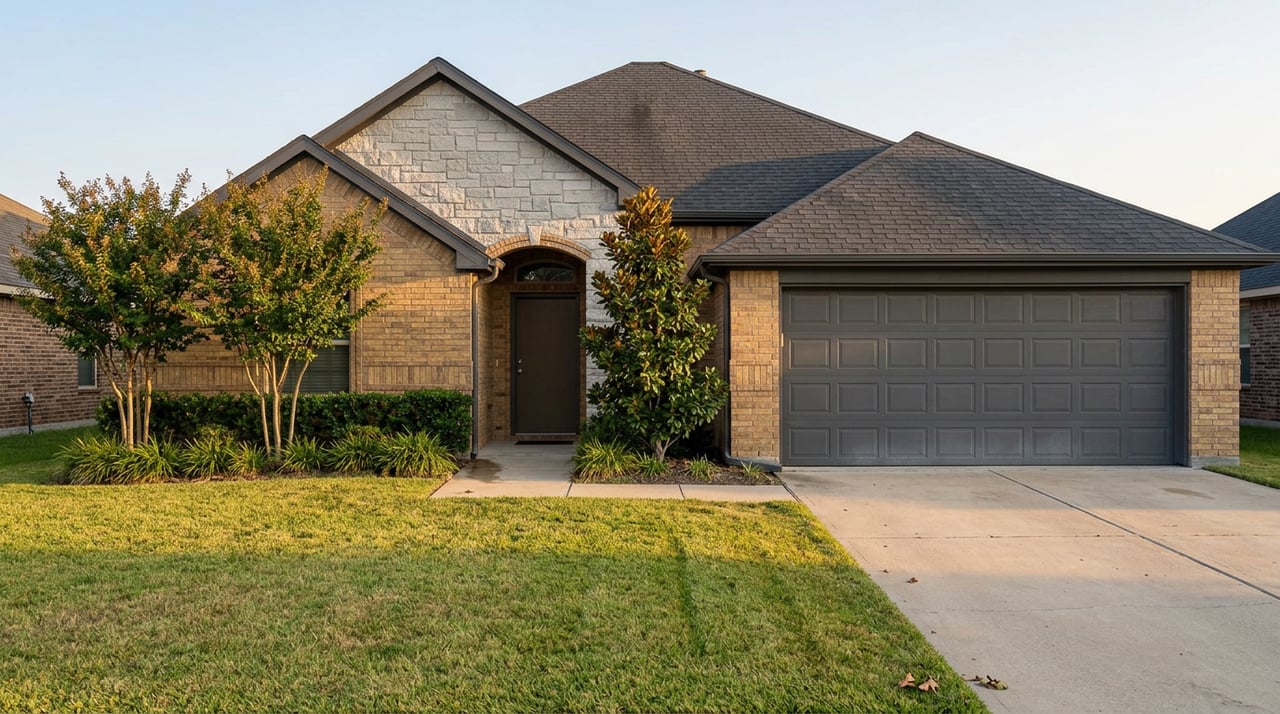
Two homes go on the market in League City this month. Same price, same square footage, same age of construction, a mile apart. A buyer comparing them pulls up the city's tax rate, does the math, and assumes the annual bill will land in roughly the same place for both.
It won't. One of those homes could cost its owner $1,200 to $2,500 more a year in property taxes than the other, and the difference has almost nothing to do with the City of League City. It comes from a line item that doesn't show up in most listing searches and rarely gets mentioned until closing disclosures arrive: the Municipal Utility District, or MUD, tied to that specific subdivision.
That gap matters more this year than most, because the city just gave every buyer a reason to think taxes are trending in one direction when a separate, more volatile piece of the bill is doing something else entirely.
The Rate the City Controls
On September 8, 2026, League City Council adopted a no-new-revenue property tax rate of $0.356505 per $100 of assessed value for fiscal year 2026-27. Council approved it as part of a $333 million budget, and it marks the twelfth consecutive year the city's rate has gone down.
A no-new-revenue rate means the city is collecting roughly the same total tax dollars as the year before, even as property values rise, rather than pocketing extra revenue simply because homes appraised higher. It's a real, verifiable trend, and it says something genuinely good about how League City has managed growth: public safety and infrastructure spending have scaled up while the municipal rate itself has come down every single year for over a decade.
It also covers only the City of League City's slice of the bill. Clear Creek Independent School District, Galveston County, and (depending on the address) Mainland College all add their own rates on top. None of those move in lockstep with the city's number, and none of them are the layer that creates the biggest swings between two similarly priced homes.
The Rate the City Doesn't Touch
A MUD is a special taxing district, created under the Texas Water Code, that finances water, sewer, and drainage infrastructure for a subdivision before the city extends its own utility systems there. The developer fronts the construction cost, the MUD issues bonds to cover it, and residents inside the district's boundary repay that debt through a dedicated line on their annual tax bill, separate from city, county, and school taxes.
League City sits inside Galveston County, and Galveston County has dozens of these districts on its books, each with its own board and its own rate. Galveston County MUD No. 44 serves the Village at Tuscan Lakes. South Shore Harbour MUD No. 7 covers the South Shore Harbour area. West Ranch Municipal District No. 1, Bacliff MUD, and Bay Colony West MUD are three more among a long list that includes numbered districts running from the single digits into the 80s. Some of these districts sit fully inside League City's boundary. Others touch it or sit nearby. All of them operate independently of the city council vote that just lowered the municipal rate.
MUD rates run anywhere from about $0.25 to more than $1.00 per $100 of assessed value, and some Texas districts have charged as much as $1.40. On a home valued in the $350,000 to $400,000 range, the difference between a $0.25 rate and a $0.90 rate is real money every single year, which is where that $1,200 to $2,500 swing between comparable homes actually comes from.
Here's how the pieces stack up on paper:
| Taxing layer | Who sets it | 2026 status |
|---|---|---|
| City of League City | City Council | $0.356505/$100, down for the 12th straight year |
| Galveston County | County Commissioners | Adopted rate down about 4.7% from the prior year |
| Clear Creek ISD | School board / voters | Rate held flat from the prior year |
| MUD (varies by subdivision) | Elected MUD board | Set independently, ranges roughly $0.25–$1.00+/$100 |
Three of those four rows are heading down or holding steady. The fourth is the one nobody controls at the city level, and it's the one most likely to make two otherwise identical homes cost different amounts to own.
Where the Difference Actually Comes From
The pattern isn't random. Newer subdivisions carry the highest MUD rates because their bonds are the youngest and the least paid down. Tuscan Lakes was originally platted as the Kenwood PUD, and Mar Bella was originally named Reflections Bay, both signs of communities built in phases over time rather than all at once. The sections built more recently, still carrying active construction debt, are the ones most likely to sit inside a district still collecting at a higher rate to service those bonds.
Older, more established neighborhoods tell a different story. Once a MUD retires its bonds, or once the city annexes the area into its own utility system, that separate tax line can shrink or disappear entirely. Nothing about the home changes. The debt behind it simply gets paid off, or the city takes over the service that used to justify the district in the first place.
This is why a citywide tax rate, even one that's fallen for twelve straight years, tells a buyer almost nothing about what a specific address will actually cost to own. The city's number describes the city. The MUD number describes a bond schedule tied to when a particular section of a particular subdivision was built and how much of that debt is still outstanding.
What This Means If You're Comparing Two Listings
A general "League City property tax rate" isn't a number you can shop with. Before comparing two homes on price alone, it's worth asking a few specific questions:
- Which MUD, by number, serves this exact address? Galveston County's appraisal district and the TCEQ's Water District Map Viewer can both confirm this by parcel, not just by neighborhood name.
- Is that district's bond debt still active, or has it been paid down? A district years into repayment behaves differently than one that just issued new bonds for a fresh phase.
- Is the home zoned to Clear Creek ISD or Dickinson ISD? Some League City subdivisions, including sections of Tuscan Lakes, split between the two, and each district sets its own school tax rate.
- Has this specific section been annexed into League City's own utility system, or is it still inside the original MUD boundary?
None of these questions show up on a standard listing sheet. All four change the real number on a tax bill more than the city's rate does.
The Federal Wrinkle Worth Knowing
MUD taxes are deductible on a federal return as real property taxes, but only if a homeowner itemizes and only up to the state and local tax cap. For the 2026 tax year, that SALT cap sits at $40,400 for most filing statuses, a temporary increase that's set to revert closer to $10,000 starting with the 2030 tax year. For a buyer weighing a higher-MUD home now, that cap is one more reason the actual after-tax cost of a specific address is worth running through a full picture rather than eyeballing the sale price.
A Few Direct Questions
Does the homestead exemption lower my MUD tax too? No. MUDs are independent taxing entities, and the general residence homestead exemption that reduces city, county, and school tax bills typically does not apply to MUD assessments. The MUD line gets calculated on its own.
Will my MUD rate ever go down or disappear? It can, once the district's bonds are retired or the area is annexed into League City's utility system, but there's no fixed calendar for this. It depends entirely on that district's specific bond schedule.
How do I find out which MUD covers a specific home? Search the address through the Galveston Central Appraisal District or the TCEQ's Water District Map Viewer. Both will confirm the exact district and its current rate.
Is a higher MUD rate a red flag? Not by itself. Newer infrastructure often comes with a MUD attached, and many buyers accept the added cost in exchange for a newer subdivision. The point isn't to avoid MUDs. It's to know the number before comparing two homes as if they carry the same tax math.
League City's falling city rate is a genuinely good headline, and it reflects real fiscal discipline over more than a decade. It just isn't the number that decides what two comparable homes will actually cost their owners each year. That number lives one layer down, tied to a specific subdivision and a specific bond schedule, and it's worth pulling before an offer goes in rather than after the first tax bill arrives.
If you're comparing homes across League City's subdivisions and want the actual tax math, not just the headline rate, before you write an offer, Melissa Rekoff at Onyx Realty Group can walk through the specific MUD, ISD, and bond status behind any address you're considering. Request Your Free Property Marketing Plan to start the conversation, whether you're comparing homes to buy or getting one ready to sell.