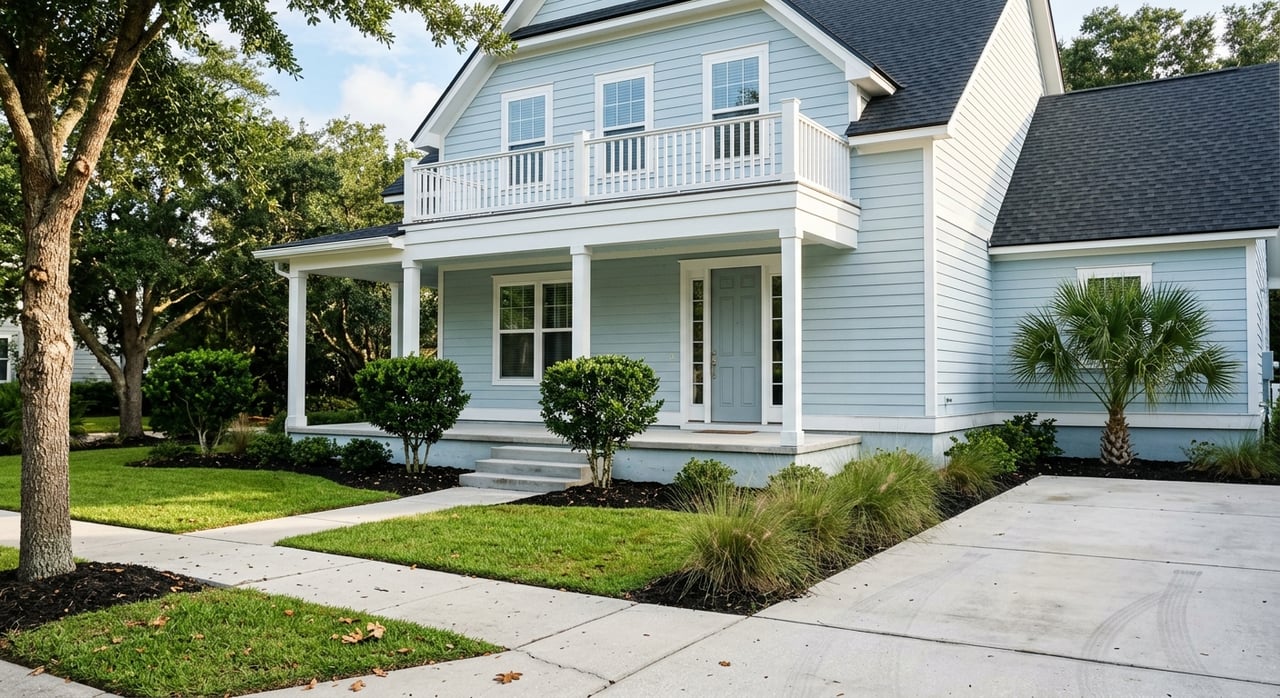
If you work in Houston but want more space, a coastal-leaning lifestyle, and a strong suburban ownership market, League City probably keeps showing up on your list. That makes sense, but the real question is how the commute fits into your daily life and your housing budget. When you understand both pieces together, you can make a smarter move with fewer surprises. Let’s dive in.
Why League City Appeals to Houston Commuters
League City sits about 30 miles south of downtown Houston, which puts it in a practical spot for buyers who want to live outside the urban core while staying connected to major job centers. The city reported in June 2026 that nearly 80% of residents commute outside the city for work, which reinforces its role as a commuter-oriented suburb.
That pattern shows up in travel-time data too. ACS QuickFacts lists the mean travel time to work in League City at 29.9 minutes, compared with 26.7 minutes across Texas and 26.4 minutes nationally. In plain terms, many households here are making a conscious tradeoff between home style, neighborhood feel, and regional drive time.
For some buyers, that tradeoff is worth it because League City also offers access to local and nearby employment tied to medical, energy, aerospace, marine, and petrochemical industries. If your job is in the Clear Lake or Bay Area corridor instead of downtown Houston, your commute setup may look very different.
What the Houston Commute Looks Like
For most League City residents heading north, I-45 is the main route into Houston. TxDOT completed an I-45 project from NASA 1 Bypass to FM 518 that added main lanes, frontage roads, and HOV diamond lanes, which matters for commuters even though congestion is still part of the planning equation.
That does not mean every League City address feels the same on a weekday morning. Your starting point inside the city, your work destination, and whether you drive every day or use a park-and-ride option can all change the experience in a big way.
If you commute during peak hours, it helps to think beyond mileage alone. A home that looks only a little farther out on a map can feel meaningfully different if it adds more time to your access point for I-45 or key arterials.
Park-and-Ride Options to Know
If you do not want to drive the full route into Houston, METRO park-and-ride service can be part of the solution. METRO describes its Park & Ride network as a regional option for commuters heading to downtown Houston or the Texas Medical Center, with free parking, 24/7 lot access, and many routes using HOV lanes.
For League City-area buyers, two nearby options stand out. METRO identifies Bay Area Park & Ride in Houston and El Dorado Park & Ride in Friendswood as relevant choices for this part of the region.
Two routes are especially useful depending on where you work:
- Route 249 serves Bay Area Park & Ride, El Dorado Park & Ride, and Downtown Transit Center service.
- Route 297 serves South Point and Monroe park-and-ride stops and connects to the Texas Medical Center area and major medical destinations.
Route frequency matters too. METRO reports Route 249 runs Monday through Friday about every 30 minutes, while Route 297 runs Monday through Friday about every 15 minutes.
If your work is tied to the Bay Area rather than central Houston, League City also has a current park-and-ride schedule connecting Clear Lake Center, League City P&R, Victory Lakes, Town Center, City Hall, and UTMB. That can be helpful if your week includes a mix of Houston trips and local or regional travel.
Housing Costs and Stability in League City
Commute decisions are easier when you understand the local housing profile. In League City, 74.7% of housing is owner-occupied, the median owner-occupied home value is $360,000, median monthly owner costs with a mortgage are $2,467, and median gross rent is $1,684.
Those numbers suggest a market where many residents are putting down long-term roots rather than treating the area as a short stop. ACS QuickFacts also shows a median household income of $121,099 and reports that 89.5% of residents lived in the same house one year ago.
For you as a buyer, that can point to a stable suburban market where resale potential, monthly carrying costs, and commute practicalities all deserve equal attention. For sellers, it supports the idea that many incoming buyers are looking closely at overall lifestyle fit, not just square footage.
How Location Within League City Matters
Not every part of League City supports the same commuting style. The city identifies I-45, FM 518 or Main Street, SH 96 or League City Parkway, FM 646, and FM 517 as key roadway corridors, and current street projects include improvements tied to SH 3, FM 518, SH 96, Walker Street, and Winfield Road.
As a practical takeaway, homes closer to those major corridors often provide the most direct access for Houston-bound travel. If a shorter or more predictable drive is high on your list, looking near the city’s main freeway and arterial spine can make sense.
That does not automatically make one area better than another. It simply means your home search should reflect how often you commute, what time you leave, and how much extra drive time you are willing to trade for lot size, newer construction, or a different setting.
Homes Near I-45 and Main Corridors
If you head to downtown Houston or the Texas Medical Center often, homes with easier access to I-45 and nearby arterial roads may help reduce friction in your routine. That can also make it easier to reach nearby METRO park-and-ride options when you want an alternative to driving the full trip.
For many relocation buyers, this is where a map-based home search becomes especially useful. A house can check every box online, but if the route in and out feels inconvenient five days a week, that matters.
Westside Tradeoffs for Space-Seeking Buyers
League City’s Westside Master Plan covers nearly 4,000 acres west of Hobbs Road and north of FM 517. That area is best understood as a growth-and-space tradeoff.
If you want newer development or a more expansive suburban feel, west and southwest League City may be appealing. If your top priority is the shortest Houston drive, areas closer to I-45 will usually be more direct.
Hybrid Work Changes the Equation
Not every Houston-area buyer is commuting five days a week anymore. In League City, 98.7% of households have a computer and 96.4% have a broadband internet subscription, which supports the idea that many homes can accommodate remote or hybrid work.
If you only go into Houston a few days a week, you may decide that a slightly longer drive is acceptable in exchange for more home space or a layout that supports a dedicated office. In that case, your search criteria may shift from pure commute efficiency to overall weekly livability.
This is one reason it helps to think in terms of your actual routine instead of a generic buyer checklist. Two households with the same budget can land in very different parts of League City based on how often they need to be on the road.
Local Lifestyle Can Ease a Longer Commute
A longer regional commute can feel more manageable when your local daily life is easier. League City says it has 15 parks, about 25 miles of hike-and-bike trails, and 6 miles of paddle trails, and the city maps page notes that the trail system links parks, schools, and neighborhoods.
That kind of local connectivity matters because not every trip has to become a freeway trip. If you can keep exercise, recreation, and some daily routines close to home, your overall week may feel less car-heavy even if your work commute is longer.
For many buyers, this is part of the hidden value in League City. You are not just choosing a house and a drive to Houston. You are choosing how the rest of your life works between those work trips.
How to Match Your Home Search to Your Commute
If you are narrowing down homes in League City, start with your real routine rather than your idealized one. Ask yourself:
- How many days each week will you go into Houston?
- Are you commuting to downtown, the Texas Medical Center, or the Bay Area corridor?
- Would you use a park-and-ride option if it improved your day?
- Do you want the most direct freeway access, or are you willing to trade that for more space?
- Does your home need a dedicated office for hybrid work?
Those answers can quickly change what “best fit” means. A buyer with a downtown schedule three days a week may prioritize access to I-45 and METRO options, while a hybrid buyer may focus more on floor plan, neighborhood setting, and local amenities.
The Bottom Line for League City Buyers
League City can be a strong fit if you want a suburban ownership market with access to Houston, Clear Lake, and other major employment areas. The key is to look at commute patterns and housing choices together, not separately.
When you do that, the right fit becomes clearer. You can decide whether you want the most direct route north, more room to spread out, easier access to transit options, or a lifestyle setup that makes the workweek feel smoother overall.
If you are planning a move and want help comparing League City neighborhoods through the lens of commute, budget, and day-to-day livability, Melissa Rekoff can help you narrow the options and move forward with confidence.
FAQs
What is the average commute time for League City residents?
- ACS QuickFacts reports a mean travel time to work of 29.9 minutes for League City residents.
What park-and-ride options are useful for League City commuters to Houston?
- METRO identifies Bay Area Park & Ride in Houston and El Dorado Park & Ride in Friendswood as relevant options for this area, with routes serving downtown Houston and the Texas Medical Center.
What Houston destinations are easiest from League City park-and-ride routes?
- METRO routes relevant to League City-area commuters connect to Downtown Transit Center service and the Texas Medical Center area, including major medical destinations.
What housing numbers should League City commuters know?
- League City has a 74.7% owner-occupied housing rate, a median owner-occupied home value of $360,000, median monthly owner costs with a mortgage of $2,467, and median gross rent of $1,684.
What parts of League City may suit different commute preferences?
- Homes closer to I-45, FM 518, SH 96, FM 646, and FM 517 generally offer more direct regional access, while west and southwest League City may appeal more to buyers seeking growth areas and more space.
Why can League City work well for hybrid workers?
- ACS QuickFacts reports that 98.7% of households have a computer and 96.4% have a broadband internet subscription, which supports remote or hybrid work needs in many households.